Glossary of electricity and natural gas terms

Updated on November 10, 2026

5-minute read

Glossary of electricity and natural gas terms

Updated on November 10, 2026

5-minute read

What you need to know

Your electricity and natural gas bills include terms that explain how much energy you use, what you're charged and how your service is delivered. Understanding these terms can help you make sense of your energy costs, including usage measured in kilowatt-hours (kWh) or gigajoules (GJ), delivery charges and administration fees.

Use the electricity and natural gas glossary below to find clear definitions of common billing terms and better understand the information on your energy bill.

To help you better understand the various energy terms, we’ve put together this helpful energy glossary.

Dictionary entry displaying the definition of the word "definition" with example usage.

Electricity terms on your Alberta energy bill

Administration fee (Fixed) - This fee is charged by us to cover the costs related to billing you for the electricity and providing customer service.

Cost of electricity - This charge covers the cost of electricity that you used during the billing period.

Distribution charge (fixed/variable) - This charge is from your distribution company to recover the operating cost of the lower voltage lines that carry electricity from the transformers to your meter. Distribution and transmission companies set those delivery charges and the Alberta Utilities Commission (AUC), an independent agency, ensures that it is fair and reasonable for the customer. No matter who you choose to buy your energy from, these fees won't change.

Energy used (kWh) - The energy used represents the kilowatt hours of electricity you consumed in the billing period. This can be either an actual or an estimate.

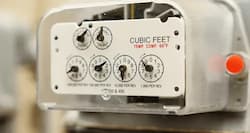
From and To meter reads - The "From" and "To" reads are your last actual meter readings. The difference between the "To" and "From" meter readings will provide you the usage for that period.

Late payment penalty date - Your payment must be received by us on or before the late payment penalty date shown on the front of the bill to avoid a late penalty charge. Some financial institutions take up to 4 business days to forward payments to our office. Any balance forward is overdue. There may be a charge for each cheque that is returned due to insufficient funds.

Local Access Fee (LAF) - This is a surcharge levied by your municipality through your Distributor. It is not approved by the Alberta Utilities Commission. Contact your Distributor, as shown on your energy bill, to find out how this charge is determined.

Meter Number - This is the number attached to the meter installed on your premise. This number is unique to each meter assigned.

Rate Rider(s) - Rate riders which are approved by the Alberta Utilities Commission (AUC) enable distribution companies and regulated retailers to recover actual operational costs that are not included in their monthly approved rates.

Transmission charge - This charge is from your transmission company to recover the costs of owning and operating the high voltage lines that carry electricity to the substation transformers. Distribution and transmission companies set those delivery charges and the Alberta Utilities Commission (AUC), an independent agency, ensures that it is fair and reasonable for the customer. No matter who you choose to buy your energy from, these fees won't change.

Natural gas terms on your Alberta energy bill

Administration fee (Fixed) - This fee is charged by us to cover the costs related to billing you for natural gas and providing customer service.

Conversion factor - The volume used between meter readings is measured in units of thousands of cubic feet (MCF). This volume is then multiplied by a conversion factor that takes into account the energy content, the pressure at which the gas is delivered, and the conversion from imperial units to metric. The result is the energy consumption that appears on your bill.

Cost of gas - This charge covers the cost of natural gas that you used during the billing period.

Delivery charge (fixed/variable) - All operating costs and revenue for ATCO Gas are recovered through the delivery charges. The fixed charge is a flat daily charge to recover a portion of the total delivery charges. The variable charge covers the remainder of the total delivery charges. The variable charge is based on natural gas consumption for the billing period.

Energy used (GJ) - The energy used represents the gigajoules you consumed in the billing period. This can either be an actual or an estimate.

From and To meter reads - The "From" and "To" reads are your last actual meter readings. The difference between the "To" and "From" meter readings will provide you the usage for that period.

Late payment penalty date - Your payment must be received by us on or before the late payment penalty date shown on the front of the bill to avoid a late penalty charge. Some financial institutions take up to 4 business days to forward payments to our office. Any balance forward is overdue. There may be a charge for each cheque that is returned due to insufficient funds. 

Meter Number - This is the number attached to the meter installed on your premise. This number is unique to each meter assigned.

Municipal Franchise Fee - This is a surcharge levied by your municipality through your Distributor. It is not approved by the Alberta Utilities Commission. Contact your Distributor, as shown on your energy bill, to find out how this charge is determined.

Rate Rider(s) - Rate riders which are approved by the Alberta Utilities Commission (AUC) enable distribution companies and regulated retailers to recover actual operational costs that are not included in their monthly approved rates. 

Frequently asked questions about energy bill terms

Show all answers

A kilowatt-hour (kWh) measures electricity consumption, while a gigajoule (GJ) measures energy used for natural gas billing. Your electricity bill shows how many kWh you've used, while your natural gas bill shows consumption in GJ. These measurements help determine your energy usage charges.

Transmission charges cover the cost of moving electricity through high-voltage power lines, while distribution charges cover delivering electricity through local infrastructure to homes and businesses. These delivery-related charges are separate from the cost of the electricity you consume.

An administration fee covers account-related services provided by your energy retailer, such as billing and customer support. The amount and how it's charged depend on your energy provider and plan. It is separate from your electricity or natural gas consumption charges.

A rate rider is an approved adjustment to certain energy charges. Rate riders can help recover or refund costs that aren't included in standard rates. Depending on the adjustment, a rate rider may appear as an additional charge or a credit on your bill.

An actual meter reading records the energy measured by your meter. An estimated reading is used when actual usage information isn't available. Your energy provider may adjust subsequent bills to account for the difference between estimated and actual consumption.


Explore the learning centre hub

Select a category to find articles for topics that interest you.