

Is an air conditioner or heat pump better for your home in Alberta?

Published on July 27, 2026

6-minute read

Is an air conditioner or heat pump better for your home in Alberta?

Published on July 27, 2026

6-minute read

What you need to know

Choosing between an air conditioner and a heat pump can affect both home comfort and long term energy use. While both systems can help cool your home, a heat pump can also provide heating, making it a more versatile option for some Alberta households.

The right choice depends on your home, your existing heating system, and how you want to manage seasonal comfort and energy costs. Installation, efficiency, and climate performance all play a role in deciding which system makes the most sense.

Understanding the difference between an air conditioner and a heat pump can help homeowners compare options more confidently and choose a system that fits their needs.

As a homeowner in Alberta, where winters are harsh, and summers can get surprisingly hot, choosing the right system to maintain a comfortable indoor temperature is crucial. Two of the most popular options are air conditioners and heat pumps. Each has its advantages and disadvantages, and the best choice for your home depends on several factors, including energy efficiency, heating and cooling needs, and the size of your home.

Air conditioners: The cooling specialists

Advantages

  • Cooling efficiency: Air conditioners are designed specifically for cooling, making them highly efficient during the summer months when temperatures can soar.
  • Lower initial cost: Generally, air conditioners have a lower upfront cost compared to heat pumps. This makes them a more budget-friendly option for those primarily concerned with cooling.
  • Longevity: In Alberta's climate, where the cooling season is relatively short, air conditioners tend to have a longer lifespan since they are only used for a few months each year.

Disadvantages

  • Heating limitation: Air conditioners do not provide heating. This means you will need a separate heating system, such as a furnace, for the colder months, leading to potentially higher overall costs.
  • Energy usage: Depending on the type of furnace or heating system you pair with an air conditioner, your energy usage in winter could be higher, especially if you rely on an electric heating system.

Heat pumps: The all-in-one solution

Advantages

  • Dual functionality: Heat pumps can both heat and cool your home, making them a versatile option. In the summer, they function like an air conditioner, and in the winter, they reverse the process to provide heat.
  • Energy efficiency: Modern heat pumps are highly energy-efficient, particularly in mild to moderately cold climates. They use electricity to move heat rather than generate it, which can result in lower energy bills compared to traditional heating systems.
  • Environmental impact: Since heat pumps are more energy-efficient, they tend to have a lower carbon footprint, making them a more environmentally friendly option.

Disadvantages

  • Higher initial cost: Heat pumps generally have a higher upfront cost than air conditioners. However, this can be offset by savings on energy bills over time.
  • Reduced efficiency in extreme cold: In Alberta’s colder regions, traditional air-source heat pumps may struggle to maintain efficiency when temperatures drop significantly below freezing. However, cold-climate heat pumps are available and designed to work efficiently in colder temperatures, though at a higher cost.
  • Complexity: Heat pumps are more complex systems, requiring more maintenance and potential repairs over their lifespan compared to a standalone air conditioner.
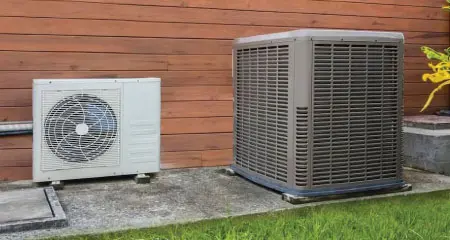
An outdoor heat pump and air conditioning unit, positioned on a concrete slab with greenery in the background.

What to consider when choosing between an air conditioner and a heat pump

1. Heating and cooling needs

If your primary concern is cooling your home during the summer, and you already have an efficient heating system in place (e.g., a natural gas furnace), an air conditioner might be the better choice. But if you’re looking for a system that can provide both heating and cooling, particularly in milder regions of Alberta, a heat pump may be more suitable.

2. Energy usage and efficiency

Looking to reduce your electricity bills especially during winter? A heat pump’s energy efficiency could be a significant advantage.

3. Existing HVAC system

If you already have a high-efficiency furnace, adding an air conditioner might make more sense. However, a heat pump could be a good investment if your heating system is outdated.

4. Home size and layout

Heat pumps can be particularly effective in smaller homes or well-insulated spaces where they can efficiently maintain a consistent temperature year-round. In larger homes, especially those with more complex layouts, a combination of a furnace and air conditioner might provide more targeted and effective heating and cooling.

5. Location in Alberta

If you live in a more temperate area of Alberta, a heat pump could serve you well year-round. However, in colder, rural areas, a traditional furnace paired with an air conditioner might be more reliable during extreme cold spells. For those in colder regions, investing in a cold-climate heat pump can offer both heating and cooling efficiently, even in lower temperatures.

Choosing between an air conditioner and a heat pump depends on various factors, including your home’s size, your energy usage, and the specific climate of your location in Alberta.

An air conditioner might be more suitable if you only need cooling and already have a reliable heating system. However, if you’re looking for a versatile system that provides both heating and cooling with greater energy efficiency, a heat pump could be a better investment, especially with the availability of cold-climate models designed for Alberta's winters.

Ultimately, assessing your home’s specific needs, energy usage patterns, and budget will help determine which system is the better fit for you!

Learn how to manage winter energy costs

Show all answers

An air conditioner only cools your home, while a heat pump can both cool and heat by transferring heat in or out depending on the season.


In many cases, yes. Heat pumps can be more energy efficient because they move heat rather than generate it, though performance depends on climate and system type.

Some heat pumps are designed to perform in colder climates, but many Alberta homes still rely on a furnace or backup heating system during extreme cold.

It can be. Installation costs depend on the type of system, the size of the home, and whether existing equipment needs to be replaced or upgraded.

You should consider your home’s heating setup, your cooling needs, installation costs, and whether you want one system that can help with both heating and cooling.

Explore the learning centre hub

Select a category to find articles for topics that interest you.