How to improve your indoor air quality

Updated on November 10, 2026

3-minute read

How to improve your indoor air quality

Updated on November 10, 2026

3-minute read

What you need to know

Indoor air quality can be affected by dust, allergens, mould, cooking and outdoor pollution, including wildfire smoke. Improving the air in your home starts with reducing sources of pollution, maintaining proper ventilation and keeping your heating and cooling systems clean.

Explore common causes of poor indoor air quality and practical ways to improve it, from regular cleaning and HVAC filter maintenance to choosing an air purifier that fits your home's needs.

Imagine opening all your windows on a mild, sunny day, allowing all that fresh air to blow through the house. It is so refreshing!

It’s easy for our indoor air to get stale, and that’s why that breeze from outside feels so good. Unfortunately, our homes can get a buildup of dust, dander, and other allergens – especially in the winter when we aren’t opening our windows.

Our indoor air quality can become less healthy if we don’t stay on top of it. But thankfully, there are things you can do to improve it and breathe easier indoors.

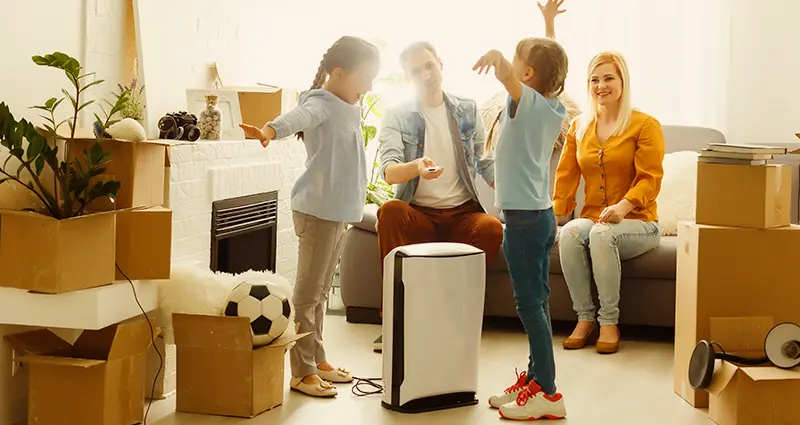
A family sits in a living room surrounded by moving boxes and a vacuum cleaner, indicating they are in the process of moving.

Common causes of poor indoor air quality

It is easy to think of pollution as an outdoor air problem. For example, the wildfire smoke we get in the summer can make the outdoor air unsafe, especially for people with asthma or respiratory issues.

But indoor air can be polluted, too! Dust, dander and other allergens can be inside. Plus, there are more hazardous pollutants like mildew and mould. We spend a lot of time indoors, especially in the winter, so if our indoor air quality is low, it can be bad for our health.

Poor indoor air quality can cause headaches, dizziness, fatigue, and irritate your eyes, nose and throat. Allergy and asthma sufferers might feel these symptoms more intensely. In the most severe cases, long-term exposure to certain indoor air contaminants, like mould or asbestos, can lead to serious diseases.  

Don’t worry. It’s not all doom and gloom. There are ways you can improve indoor air quality in your home, breathe easier and live healthier.

How HVAC filters and air purifiers improve indoor air quality

We all want an airtight, energy-efficient home, but there is one side effect to that. Our efficient homes are so effectively sealed that they take more effort to ventilate. Thankfully, solutions that can make your indoor air cleaner and fresher.

Built-in indoor air quality and HVAC filtration systems

Indoor Air Quality systems, or IAQ systems, can be a few things. For one, your HVAC air filters are a part of any IAQ system. They filter out dust and dirt from your indoor air and allow fresher air back into the house. High-end filters can also filter our allergens, pathogens and certain pollutants.

While regularly changing those air filters is key to improved indoor air quality, they can’t stop the smallest particles. Investing in an advanced air cleaning system that is built into your HVAC system, with electronically charged filters can weed out those teeny tiny contaminants. Plus, some systems use UV light, replicating the sun’s ability to kill germs and even remove odours.

These IAQ solutions are also energy efficient and worth the investment. To learn more, contact a reputable HVAC company in your area.

Portable air purifiers for your home

Because of the wildfire smoke and other outdoor air pollution in recent years, portable air purifiers have increased in popularity. These air purifiers are considered an IAQ system. They’re not as effective for improving air quality throughout the entire house as a built-in system, but they can still be helpful. They might be the best solution if you’re on a tight budget.

Portable air purifiers come in different types and at varying price points. Higher-end purifiers with HEPA air filters can filter out smoke particles and pathogens like viruses and bacteria.

Spending some time researching indoor air purifiers will ensure you get the right one for your needs, space and budget.


Cleaning and ventilation tips for better indoor air quality

An advanced IAQ system or portable air purifier can minimize indoor air pollution, but they need your help! Keeping things clean and ventilated is one of the best things you can do to improve the air health in your home.

For example, mould and bacteria can build up in your ductwork over the years. Professional duct cleaning can remove that unhealthy build-up, so it’s not blowing around the house every time the furnace or air conditioner kicks in. While they’re at it, they can also clean out your dryer vents, as well as exhaust fans and vents in the kitchen and bathroom.

Health Canada provides helpful tips for improving ventilation and indoor air quality. For instance, always run your kitchen fan when cooking and change those HVAC air filters regularly. You should also keep furniture, drapery and carpets clean to reduce the buildup of dust and allergens.

Keeping things clean and ventilated and investing in an IAQ system can improve your indoor air quality at home and the health of your and your family.

Show all answers

Common indoor air pollutants include dust, pet dander, mould, cooking particles, cleaning product emissions and smoke entering from outdoors. Poor ventilation and excess moisture can also contribute to indoor air quality problems.

Start by reducing pollution sources, controlling moisture, regularly cleaning your home and maintaining your HVAC filters. Use kitchen and bathroom exhaust fans as appropriate, and bring in fresh air when outdoor air quality is suitable. Air purifiers may provide additional filtration.

Yes. A properly sized portable air purifier with a high-efficiency particulate air (HEPA) filter can help remove fine smoke particles from indoor air. For better results, keep windows and doors closed during smoky conditions and follow local air quality advisories.

Follow your furnace and filter manufacturers' recommendations for inspection and replacement. The appropriate schedule depends on your filter type, HVAC system, household conditions and how often the system runs. Homes with pets or higher dust levels may need more frequent filter changes.

Opening windows can help increase ventilation when outdoor air quality is good. However, during wildfire smoke events or periods of high outdoor pollution, keeping windows closed may be safer. Check local air quality conditions before ventilating your home.


Explore the learning centre hub

Select a category to find articles for topics that interest you.